Ecommerce Website Development Services: 9 Powerful Ways to Grow Your Online Business
Expert tips, design inspiration, and digital strategies to grow your business online.
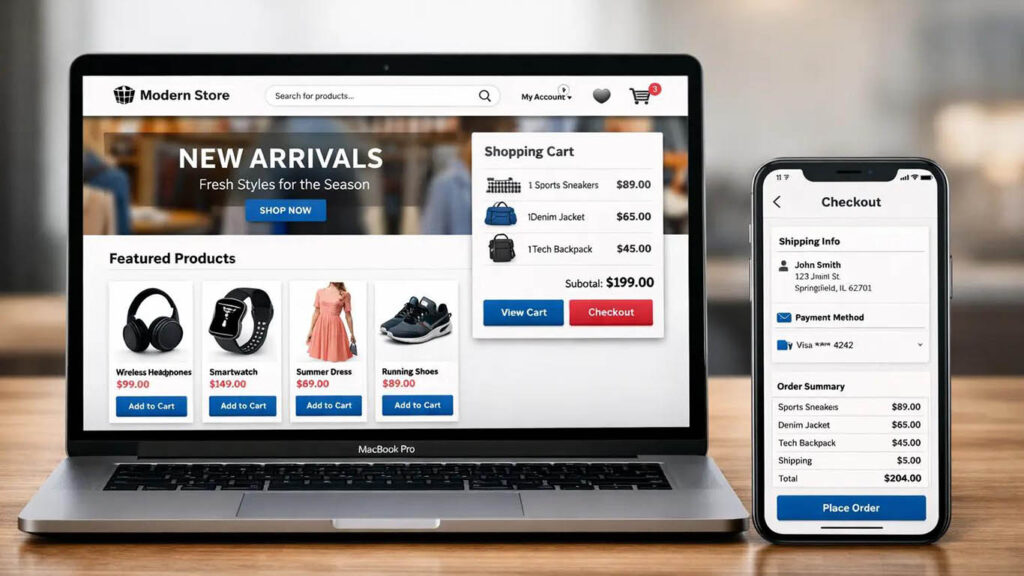

Customers today expect businesses to offer convenient ways to explore products and place orders online. Whether you run a small shop, a growing retail company or an established brand, having a professional online store can help you reach customers beyond your physical location.
Ecommerce website development services help businesses create online shopping platforms where customers can browse products, check prices, add items to a shopping cart and place orders. A properly planned ecommerce website can also help you manage products, receive customer enquiries and present your brand professionally.
However, building a successful online store involves more than simply displaying product photographs. You need a user-friendly design, responsive layouts, organised product pages, a convenient checkout process and suitable security features.
In this guide, Webnart explains the important features, benefits and development steps involved in creating an ecommerce website for your business.
Table of Contents
- What Are Ecommerce Website Development Services?
- Why Does Your Business Need an Ecommerce Website?
- 9 Important Features of an Ecommerce Website
- Types of Ecommerce Websites
- Ecommerce Website Development Process
- Choosing the Right Ecommerce Platform
- Why SEO Matters for an Online Store
- Factors That Affect Ecommerce Website Cost
- Why Consider Webnart?
- Frequently Asked Questions
What Are Ecommerce Website Development Services?
Ecommerce website development services involve planning, designing and building websites that allow businesses to sell products or services online. These websites provide customers with a digital shopping experience and give business owners tools to manage their online operations.
A typical ecommerce website includes a homepage, product catalogue, product detail pages, shopping cart, checkout page and contact information. Depending on business requirements, it may also include customer accounts, payment gateway integration, shipping options, inventory management and order tracking.
For example, a clothing retailer may want an online store with separate categories for men’s wear, women’s wear and accessories. A furniture business may need large product photographs, detailed specifications and delivery information. A grocery store may require product quantities, local delivery options and repeat ordering.
The right website structure depends on what you sell, who your customers are and how you plan to manage orders.
Why Does Your Business Need an Ecommerce Website?
A physical shop usually serves customers who visit its location. An online store creates another way for people to discover your business and explore your products.
With professional ecommerce website development services, businesses can create an online shopping platform that remains accessible to customers beyond normal shop opening hours.
Reach Customers in More Locations
Your website can help people from different areas discover your products. Depending on your delivery arrangements, you may serve customers in your city, across your state or in other parts of India.
Make Product Information Available
Customers can view product photographs, prices, specifications and descriptions before contacting you or placing an order. This reduces the need to answer the same basic product questions repeatedly.
Build a Professional Online Identity
Your website can display your logo, brand colours, company information and product collections in one organised place. A consistent online presentation helps customers understand your business.
Support Your Marketing Activities
You can share product pages through WhatsApp, Facebook, Instagram and other marketing channels. Your website can act as the central destination for customers who want to learn more or place an order.
9 Important Features of an Ecommerce Website
Before starting development, identify the features that are important for your products and customers. The following features provide a useful starting point for planning a professional online store.
1. Responsive and Mobile-Friendly Design
Many customers use smartphones to browse and shop online. Your website should adjust automatically to different screen sizes, including mobile phones, tablets and desktop computers.
Product images, navigation menus, buttons and forms should remain easy to use on smaller screens. A responsive design helps create a consistent shopping experience across devices.
2. Organised Product Catalogue
A product catalogue allows customers to explore the items available in your store. Products should be arranged into relevant categories so visitors can find what they need without unnecessary searching.
For example, an electronics store might organise products into mobile phones, laptops, accessories and home appliances. Each product page should contain useful information and clear photographs.
3. Detailed Product Pages
Every product should have its own page containing a product name, price, photographs and description. Depending on the product, you may also include size, colour, material, specifications, availability and product variations.
Accurate product information helps customers make informed purchasing decisions.
4. Shopping Cart System
A shopping cart allows customers to add multiple products before proceeding to checkout. It should clearly display selected items, quantities, prices and the order total.
Customers should be able to update quantities or remove products easily.
5. Simple Checkout Process
The checkout page is an important part of the shopping experience. It should collect the necessary customer and delivery information without making the process confusing.
Keep the number of steps reasonable and clearly explain what customers need to do to complete their orders.
6. Secure Payment Options
Depending on your business requirements, you may offer cash on delivery, UPI, bank transfer or online payment through a supported payment gateway.
Payment gateway services may require separate registration, verification and transaction charges. Choose payment methods that are suitable for your customers and business operations.
7. Order and Inventory Management
An ecommerce administration system can help you review customer orders, update order statuses and manage product information. Inventory features can help you track stock quantities and identify products that need replenishment.
The exact management options depend on the platform and features selected for your website.
8. Search and Product Filters
As your product collection grows, customers need convenient ways to find specific items. A search option and useful filters can help visitors browse products by category, price, size, colour or other relevant attributes.
9. Security, Backup and Maintenance
Your online store may collect customer contact details and order information. Use HTTPS with an SSL certificate, keep the website software updated and maintain regular backups.
Website security and maintenance should be considered from the beginning rather than after problems occur.
Types of Ecommerce Websites
Different businesses require different types of online stores. Understanding the main ecommerce models can help you select the right website structure.
Business-to-Consumer (B2C)
B2C websites allow businesses to sell products directly to individual customers. Examples include clothing stores, electronics shops, furniture retailers and beauty product businesses.
Business-to-Business (B2B)
B2B websites are designed for businesses selling products or services to other businesses. They may include bulk pricing, wholesale enquiries, business accounts and quotation requests.
Consumer-to-Consumer (C2C)
C2C platforms allow individuals to buy and sell products or services to other individuals. These platforms often require user accounts, product listings and communication features.
Single-Vendor Online Store
A single-vendor ecommerce website sells products from one business or seller. This is often a suitable starting point for retailers who want to sell their own products online.
Multi-Vendor Marketplace
A multi-vendor marketplace allows multiple sellers to list and sell products through one platform. It generally requires additional features such as seller registration, separate vendor dashboards, commission management and order administration.
Ecommerce Website Development Process
A clear development process helps reduce confusion and keeps the project focused on business requirements. Here are the typical stages involved in creating an online store.
Step 1: Understand Your Business Requirements
Start by identifying your products, target customers and business goals. Prepare a list of product categories, expected product quantity, delivery locations and required payment methods.
Decide whether you need a simple online catalogue, a complete shopping cart system or a more advanced ecommerce platform.
Step 2: Plan the Website Structure
Prepare a list of important pages, such as Home, Shop, Product Details, About Us, Contact, Cart, Checkout, Privacy Policy and Shipping Policy.
Organise your product categories and plan how visitors will move from the homepage to the product and checkout pages.
Step 3: Select a Domain and Hosting
Your domain name is the address customers use to visit your website. Choose a name that is relevant to your brand and easy to remember.
Web hosting stores your website files and database. Consider performance, storage, security, backup facilities and technical support before selecting a hosting plan.
Step 4: Design the Website
Create a design that matches your brand identity and product category. Use consistent colours, readable typography, clear navigation and attractive product layouts.
Professional ecommerce website development services should focus on both visual presentation and practical usability.
Step 5: Develop and Add Products
Build the required website pages and configure the selected ecommerce features. Add product names, photographs, descriptions, prices and relevant variations.
Make sure that the product information is accurate and easy for customers to understand.
Step 6: Configure Payments and Delivery
Set up your chosen payment methods and delivery arrangements. Clearly communicate shipping charges, delivery areas, estimated delivery times and return conditions.
Step 7: Test and Launch
Test the website on different devices and browsers. Check product pages, navigation, forms, cart functionality, checkout and order notifications.
Once the important features work correctly, prepare the website for launch.
Step 8: Maintain and Improve
After launch, update products, review customer feedback, monitor website performance and maintain regular backups. Add new features when your business requirements change.
Choosing the Right Ecommerce Platform
The technology used to build your online store can affect its management, flexibility and future development. The best platform depends on your budget, technical requirements and business plans.
WordPress with WooCommerce
WordPress with WooCommerce is a popular option for businesses that want to manage products and orders through a website administration dashboard. It supports product categories, shopping carts, checkout features and extensions for additional functionality.
It can be suitable for small and medium-sized online stores, depending on hosting quality, configuration and maintenance.
Custom Website Development
A custom-developed ecommerce website can be planned around specific business requirements. It may be useful when a business needs specialised workflows, integrations or features that are not easily available through standard solutions.
Custom development generally requires careful planning, testing and ongoing technical support.
How to Make the Right Choice
Before selecting a platform, consider your product quantity, expected traffic, required features, available budget and ability to manage the website. Avoid choosing a complicated solution if a simpler platform can meet your current needs.
Why SEO Matters for an Online Store
Creating an ecommerce website is only one part of building an online business. Customers also need ways to discover your products through search engines and other online channels.
Search engine optimisation (SEO) helps improve the structure and content of your website so search engines can understand its pages.
Important ecommerce SEO practices include:
- Writing unique titles and descriptions for important pages.
- Using clear product names and useful product descriptions.
- Creating descriptive and readable page URLs.
- Adding relevant ALT text to product images.
- Organising products into meaningful categories.
- Improving mobile usability and page loading performance.
- Using internal links between related pages and products.
- Creating helpful content that answers customer questions.
SEO takes time and does not guarantee a particular search ranking. However, a well-structured website provides a stronger foundation for long-term organic visibility.
Factors That Affect Ecommerce Website Development Cost
The cost of building an online store depends on the project scope. A basic ecommerce website with a limited product catalogue will generally require different resources from a large online store with advanced integrations.
Some important cost factors include:
- Website design: Custom layouts, branding and user interface requirements.
- Number of products: Product quantity and the time required to prepare product information.
- Platform: WordPress, WooCommerce or custom development.
- Payment integration: Setup and configuration of supported payment services.
- Shipping features: Delivery calculations, shipping rules and courier integrations.
- Additional functionality: Customer accounts, inventory tools, filters and reporting.
- Hosting and domain: Registration, hosting and renewal expenses.
- Maintenance: Updates, backups, security checks and technical assistance.
Ask your website development provider for a clear quotation that explains the included features, delivery timeline and any recurring costs.
Why Consider Webnart for Ecommerce Website Development Services?
Webnart is a creative web design and branding company in India. We provide design-related services and website development solutions for businesses looking to establish or improve their online presence.
We believe a business website should be visually professional, easy to navigate and planned around the needs of its customers.
When discussing an ecommerce project, the important areas to consider include:
- Professional website design: A clean layout that represents your brand.
- Responsive development: A website experience suitable for mobile, tablet and desktop devices.
- Product presentation: Organised product pages and categories.
- User-friendly navigation: Clear menus and convenient shopping journeys.
- Business-focused features: Features planned according to your products and order process.
- SEO-friendly structure: Essential on-page SEO elements and organised website content.
- Future improvements: A website structure that can be reviewed and expanded as requirements change.
Whether you are starting a new online store or planning to improve an existing website, discuss your requirements before choosing the development approach.
Explore our Website Design & Development Services to learn more about Webnart’s website solutions.
Build Your Online Store with Webnart
Planning to sell products online? Discuss your business requirements with Webnart and explore a suitable ecommerce website solution.
Frequently Asked Questions
1. What are ecommerce website development services?
They involve planning, designing and developing online shopping websites where businesses can display products, receive orders and manage online sales.
2. How long does it take to develop an ecommerce website?
The timeline depends on the website design, number of products, required features and project complexity. A basic store may take less time than a custom ecommerce platform with advanced integrations.
3. Can I manage products myself after the website is launched?
Yes. Depending on the platform and configuration, you can use an administration dashboard to add products, update prices, manage stock and review orders.
4. Can an ecommerce website accept online payments?
Yes. A suitable payment gateway can be integrated to accept supported online payment methods. Provider approval, verification and transaction charges may apply.
5. Is an ecommerce website suitable for a small business?
Yes. Small businesses can start with a simple online store and add more products or features as their business grows.
6. Can I use WhatsApp with my ecommerce website?
Yes. A WhatsApp contact or enquiry option can help customers communicate with your business about products, orders and delivery.
7. Will my ecommerce website work on mobile phones?
A properly developed responsive website should work across mobile phones, tablets and desktop computers. Mobile usability should be checked before launch.
8. Do I need SEO for my ecommerce website?
SEO can help search engines understand your website and product pages. It is useful for improving the possibility of appearing in relevant search results, although rankings are not guaranteed.
9. How can I get ecommerce website development services from Webnart?
Visit the Webnart contact page and share your business type, product categories and required features. This will help start a discussion about a suitable website solution.
Conclusion
A professional online store can help businesses present their products, connect with customers and create another channel for receiving orders. However, the success of an ecommerce website depends on more than its appearance. It also needs convenient navigation, useful product information, a simple checkout process and ongoing maintenance.
Choosing suitable ecommerce website development services can help you build a website around your actual business requirements. Start with the essential features, plan for future growth and focus on creating a smooth shopping experience for your customers.
If you are ready to take your business online, Webnart can help you explore website design and development solutions for your next step.